If you’re shopping for an engagement ring in Chandler and want something brilliant, durable, and dramatically more affordable than a natural diamond, moissanite rings in Chandler, AZ offer a compelling option. Moissanite is a lab-created gemstone made of silicon carbide that rivals diamonds in hardness and sparkle, yet costs 80–90% less. For many couples, moissanite delivers the engagement ring they’ve always wanted without the financial strain, and it’s become one of the fastest-growing alternatives in the jewelry industry.
What Is Moissanite? A Beginner’s Guide to This Diamond Alternative
Moissanite is a gemstone composed of silicon carbide, a crystalline compound with extraordinary optical and physical properties. Unlike synthetic diamonds created in labs using existing carbon, moissanite is an entirely different material that achieves many of the same desirable traits—hardness, clarity, and brilliance—at a fraction of the cost. When you wear a moissanite ring, you’re wearing a genuine gemstone with real scientific credentials.
The story of moissanite is fascinating and rooted in science. French chemist Henri Moissan discovered silicon carbide in 1893 while studying meteorite samples, and the gemstone was later named in his honor. For over a century, moissanite existed only in laboratories. In the 1990s, engineers perfected the process of growing moissanite crystals large enough and clear enough for fine jewelry, and it entered the mainstream engagement ring market in the early 2000s.
Here’s an important distinction: moissanite is lab-created, not natural. It does not occur in nature in quantities suitable for jewelry. This doesn’t diminish its value or beauty. Because moissanite is engineered in controlled laboratory conditions, every stone is virtually identical in quality, and there is no mining impact. For environmentally conscious shoppers in the Chandler area, this represents a genuine advantage over mined diamonds.
Moissanite vs. Diamond: Side-by-Side Comparison
On paper, moissanite performs remarkably well against diamonds. On the Mohs hardness scale, moissanite scores 9.25 compared to diamond‘s 10. In practical terms, this means moissanite resists scratching just as effectively as a diamond for everyday wear. Both materials are suitable for daily-wear engagement rings, and both will maintain their polish for a lifetime.
Clarity is another point of comparison. Diamond inclusions and color grades drive much of the diamond market’s pricing structure. Moissanite, because it’s lab-created, typically exhibits near-perfect clarity. Most moissanite rings come with VS1 clarity or better, which surpasses the clarity of many diamonds in the same price range.
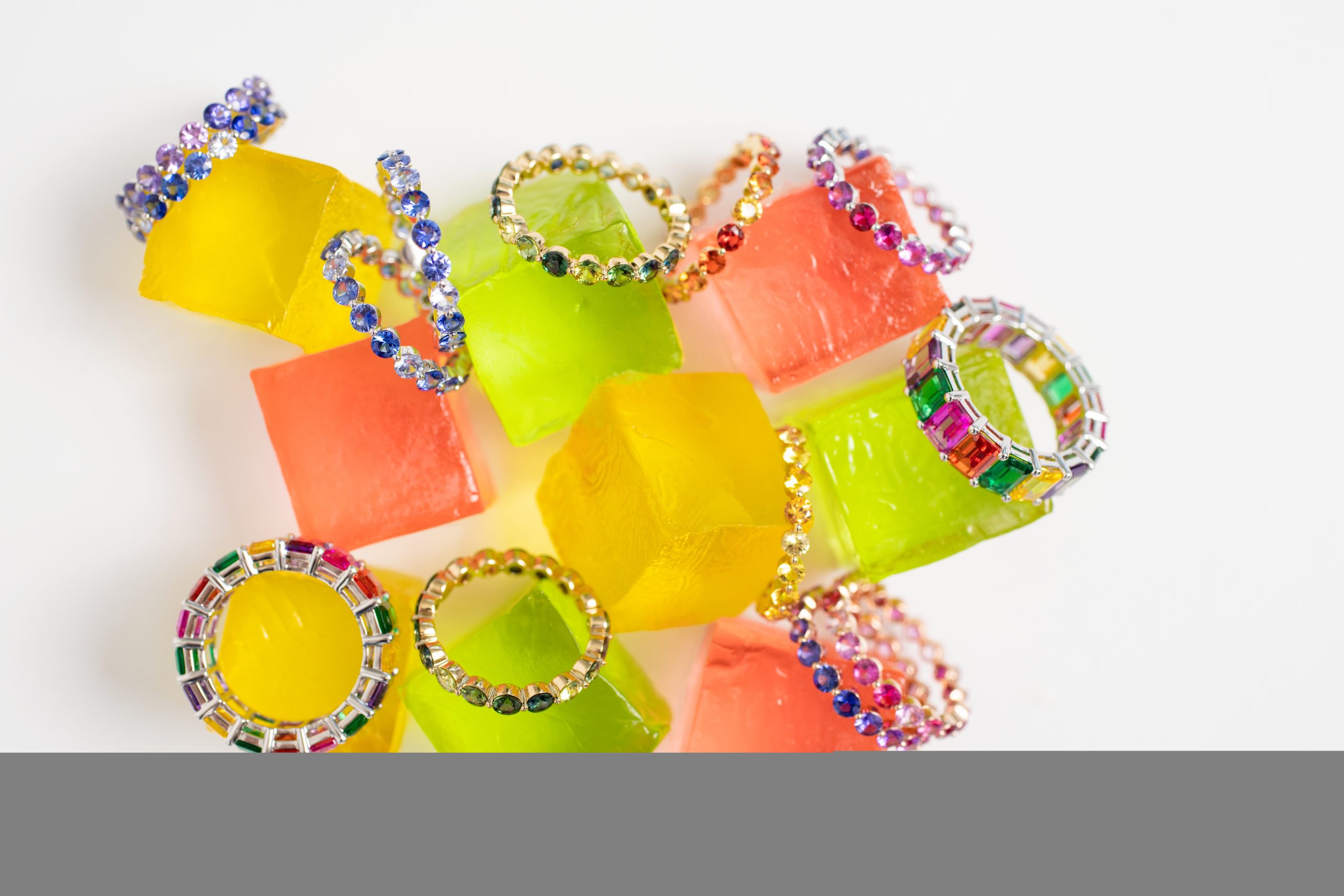
The most noticeable difference between moissanite and diamond lies in sparkle and light refraction. Diamonds scatter light in a way that produces subtle flashes of color. Moissanite has a higher refractive index, which means it bends light more aggressively and produces more noticeable rainbow sparkles—especially in bright sunlight or under artificial lighting. Some people call this the “disco ball effect,” and it’s a feature, not a flaw, if you like visible brilliance.
Can a jeweler tell a moissanite ring from a diamond by looking at it? Yes, an experienced jeweler can identify moissanite under magnification by examining the light refraction pattern and birefringence (the stone’s ability to split light into two rays). However, to the naked eye—and especially from a distance—a well-cut moissanite ring looks extraordinarily similar to a diamond. Many people won’t notice the difference in casual settings.
Cost Breakdown: Why Moissanite Rings Are So Affordable
The price advantage of moissanite is dramatic. A 1-carat moissanite stone typically costs $200–$400, while a comparable diamond of similar clarity and color might cost $3,000–$6,000 or more. A complete engagement ring with moissanite center stone, set in 14K gold or platinum, often costs $800–$2,500, while a natural diamond ring in the same metal and weight class would exceed $5,000–$10,000.
Why is moissanite so much less expensive? The answer is supply and production. Diamonds derive much of their value from rarity and the marketing efforts of major diamond miners. Moissanite production is fully controlled in laboratories, which means supply is predictable and unlimited. No scarcity markup applies. Laboratory production is also significantly more efficient than mining, cutting, and polishing natural diamonds, reducing labor and extraction costs.
One hidden consideration: not all moissanite is created equally. Older moissanite from the early 2000s sometimes had a noticeable yellowish or greenish tint. Modern moissanite is now produced in grades ranging from “colorless” (DEF on the diamond color scale) to “near-colorless” (GHI). If you’re shopping for moissanite in Chandler, ensure your jeweler offers current-generation colorless or near-colorless stones, which have no visible tint.
Another cost consideration is certification. High-quality moissanite from reputable manufacturers comes with a certificate from the Gemological Institute of America (GIA) or the International Gemological Institute (IGI), which adds a small premium but provides documented proof of the stone’s properties. This certification protects your investment and provides peace of mind.
Durability and Longevity: Will a Moissanite Ring Last Forever?
Moissanite is engineered for durability. At 9.25 on the Mohs hardness scale, it resists scratching as effectively as a diamond and far better than any other gemstone. You can wear a moissanite ring every day, wash dishes in it, exercise in it, and never worry about surface damage. The stone itself will not scratch under normal use.
However, one common concern is “clouding”—the idea that moissanite loses its shine or becomes hazy over time. This is largely a myth. Modern moissanite does not cloud, yellow, or degrade. The original versions from the early 2000s sometimes exhibited color shifts or surface changes, but current production standards have eliminated this issue. With routine care—occasional professional cleaning and avoiding harsh chemicals—a moissanite ring will look as brilliant in 50 years as it does today.
The setting matters as much as the stone. Whether your moissanite ring is mounted in white gold, yellow gold, platinum, or rose gold, the metal can scratch and wear with age. This is normal and expected. Good jewelry insurance covers accidental damage to both stone and setting, and professional jewelers can refinish or repair the metal. The moissanite center stone itself, however, is virtually permanent.
Scientific data supports long-term durability. Moissanite is used in industrial applications where extreme durability is required—as cutting tools, in aerospace, and in semiconductor manufacturing. The same material in your engagement ring has been tested under far more demanding conditions and has performed flawlessly for decades. For real-world jewelry use, moissanite is as close to forever as any gemstone can be.
Real Chandler Stories: Couples Who Chose Moissanite and Why
Conversations with Chandler couples reveal why moissanite has become increasingly popular for engagement rings. One couple, Sarah and Marcus, chose moissanite because they wanted to allocate their resources differently. Instead of spending $7,000 on a diamond, they invested $1,200 in a stunning moissanite ring and used the savings for a down payment on a house in south Chandler. For them, the choice was financial logic—both got what they valued most.
Another customer, Jennifer, was drawn to moissanite for ethical reasons. She wanted no connection to mining practices and preferred a gemstone with a documented laboratory origin. She loved the idea that her stone was created in a controlled facility with no environmental impact. After wearing her moissanite engagement ring for three years, she reports zero regrets and receives compliments regularly.
What surprised many customers was how moissanite performs in photographs. The extra sparkle that some people worry will look “fake” actually photographs beautifully—rings with moissanite centers appear even more brilliant in engagement photos and social media posts. This unexpected benefit has converted several skeptics into enthusiasts.
Shop Moissanite Rings in Chandler at Myranda Fine Jewelry
Myranda Fine Jewelry brings expertise and local service to your moissanite ring purchase. The showroom in Chandler offers a variety of moissanite ring styles, from classic solitaires to three-stone designs, halo settings, and vintage-inspired rings. Whether you prefer white gold, yellow gold, rose gold, or platinum, the team can source or create the exact ring you envision.
Custom design is where Myranda excels. If you’ve seen a ring style you love online but want it with a moissanite center, or if you have a completely original idea, the jewelers can bring it to life. The custom design process typically takes 4–6 weeks and begins with a detailed consultation to understand your aesthetic, budget, and preferences. You’ll see sketches and have the chance to refine details before any work begins.
Myranda Fine Jewelry guarantees all moissanite stones with GIA or IGI certification and backs every ring with a comprehensive warranty covering defects in craftsmanship. You’ll also have access to professional cleaning, resizing, and maintenance services for the lifetime of your ring. The team’s commitment to customer education means you’ll understand exactly what you’re purchasing and why moissanite is the right choice for your engagement ring. Contact Myranda Fine Jewelry today to discuss your moissanite ring ideas.
Frequently Asked Questions About Moissanite Rings
The FAQs below address the most common concerns shoppers raise when considering moissanite engagement rings.
How do I know if a moissanite ring is “good quality”?
Look for moissanite with GIA or IGI certification, which documents color grade (DEF or GHI preferred), clarity, cut, and carat weight. Reputable jewelers also provide documentation of the manufacturer—brands like Charles & Colvard and Moissanite Forever are industry standards. Ask your jeweler about the stone’s origin and when it was produced; modern stones (2010 and later) have superior clarity and color compared to older inventory.
Will my moissanite ring look obviously fake?
To the naked eye, a high-quality moissanite ring looks virtually identical to a diamond. The main visible difference is the sparkle pattern—moissanite produces more noticeable rainbow flashes, especially in bright light. Some people view this as a plus; others prefer diamond’s subtler sparkle. A trained jeweler can identify moissanite under magnification, but casual observers will not be able to tell.
Can moissanite be resized or repaired?
Yes. Because moissanite is set in metal just like a diamond, the ring can be resized, refinished, or repaired by any jeweler. The stone itself cannot be damaged by heating or typical jewelry work. If you ever need to modify your ring, any professional jeweler in Chandler can handle the work.
Is moissanite a good choice for men’s wedding bands?
Absolutely. Moissanite works beautifully in men’s rings, including flat bands, domed styles, and rings with stone accents. Because the stone is extremely durable, it’s ideal for active lifestyles. Many men appreciate the lower cost and the environmental profile of lab-created moissanite.
What if I change my mind later—can I sell a moissanite ring?
Moissanite has a secondary market, though resale value is lower than comparable diamonds. Because moissanite is not rare or scarce, jewelry buyers offer less for used moissanite rings than for diamonds. If resale value is important to your decision, discuss this directly with your jeweler.
How often does moissanite need professional cleaning?
Once or twice per year is typical for regular cleaning and inspection. Myranda Fine Jewelry offers professional cleaning services that remove oils, dust, and residue and restore the ring’s original brilliance. Many customers also clean their rings at home with mild soap and warm water.
Frequently Asked Questions
How do I know if a moissanite ring is 'good quality'?
Look for moissanite with GIA or IGI certification, which documents color grade (DEF or GHI preferred), clarity, cut, and carat weight. Reputable jewelers also provide documentation of the manufacturer—brands like Charles & Colvard and Moissanite Forever are industry standards. Ask your jeweler about the stone's origin and when it was produced; modern stones (2010 and later) have superior clarity and color compared to older inventory.
Will my moissanite ring look obviously fake?
To the naked eye, a high-quality moissanite ring looks virtually identical to a diamond. The main visible difference is the sparkle pattern—moissanite produces more noticeable rainbow flashes, especially in bright light. A trained jeweler can identify moissanite under magnification, but casual observers will not be able to tell.
Can moissanite be resized or repaired?
Yes. Because moissanite is set in metal just like a diamond, the ring can be resized, refinished, or repaired by any jeweler. The stone itself cannot be damaged by heating or typical jewelry work.
Is moissanite a good choice for men's wedding bands?
Absolutely. Moissanite works beautifully in men's rings, including flat bands, domed styles, and rings with stone accents. Because the stone is extremely durable, it's ideal for active lifestyles.
What if I change my mind later—can I sell a moissanite ring?
Moissanite has a secondary market, though resale value is lower than comparable diamonds. Because moissanite is not rare or scarce, jewelry buyers offer less for used moissanite rings than for diamonds.
How often does moissanite need professional cleaning?
Once or twice per year is typical for regular cleaning and inspection. Myranda Fine Jewelry offers professional cleaning services that remove oils, dust, and residue and restore the ring's original brilliance.
{“@context”:”https://schema.org”,”@type”:”FAQPage”,”mainEntity”:[{“@type”:”Question”,”name”:”How do I know if a moissanite ring is ‘good quality’?”,”acceptedAnswer”:{“@type”:”Answer”,”text”:”Look for moissanite with GIA or IGI certification, which documents color grade (DEF or GHI preferred), clarity, cut, and carat weight. Reputable jewelers also provide documentation of the manufacturer—brands like Charles & Colvard and Moissanite Forever are industry standards. Ask your jeweler about the stone’s origin and when it was produced; modern stones (2010 and later) have superior clarity and color compared to older inventory.”}},{“@type”:”Question”,”name”:”Will my moissanite ring look obviously fake?”,”acceptedAnswer”:{“@type”:”Answer”,”text”:”To the naked eye, a high-quality moissanite ring looks virtually identical to a diamond. The main visible difference is the sparkle pattern—moissanite produces more noticeable rainbow flashes, especially in bright light. A trained jeweler can identify moissanite under magnification, but casual observers will not be able to tell.”}},{“@type”:”Question”,”name”:”Can moissanite be resized or repaired?”,”acceptedAnswer”:{“@type”:”Answer”,”text”:”Yes. Because moissanite is set in metal just like a diamond, the ring can be resized, refinished, or repaired by any jeweler. The stone itself cannot be damaged by heating or typical jewelry work.”}},{“@type”:”Question”,”name”:”Is moissanite a good choice for men’s wedding bands?”,”acceptedAnswer”:{“@type”:”Answer”,”text”:”Absolutely. Moissanite works beautifully in men’s rings, including flat bands, domed styles, and rings with stone accents. Because the stone is extremely durable, it’s ideal for active lifestyles.”}},{“@type”:”Question”,”name”:”What if I change my mind later—can I sell a moissanite ring?”,”acceptedAnswer”:{“@type”:”Answer”,”text”:”Moissanite has a secondary market, though resale value is lower than comparable diamonds. Because moissanite is not rare or scarce, jewelry buyers offer less for used moissanite rings than for diamonds.”}},{“@type”:”Question”,”name”:”How often does moissanite need professional cleaning?”,”acceptedAnswer”:{“@type”:”Answer”,”text”:”Once or twice per year is typical for regular cleaning and inspection. Myranda Fine Jewelry offers professional cleaning services that remove oils, dust, and residue and restore the ring’s original brilliance.”}}]}
{“@context”:”https://schema.org”,”@type”:”Article”,”headline”:”Moissanite Rings in Chandler: A Brilliant Alternative to Diamonds”,”description”:”Moissanite rings in Chandler, AZ offer 80% savings vs. diamonds with 9.25 hardness & lasting brilliance. Learn if moissanite is right for you.</antml_descriptio","keywords":["moissanite rings chandler az"],"publisher":{"@type":"Organization","name":"Myranda Fine Jewelry","url":"https://myrandafinejewelry.com"},"mainEntityOfPage":{"@type":"WebPage","@id":"https://myrandafinejewelry.com"}}
Serving the Greater Phoenix Area
Myranda Fine Jewelry proudly serves clients throughout the Phoenix metropolitan area. Find our services near you: